
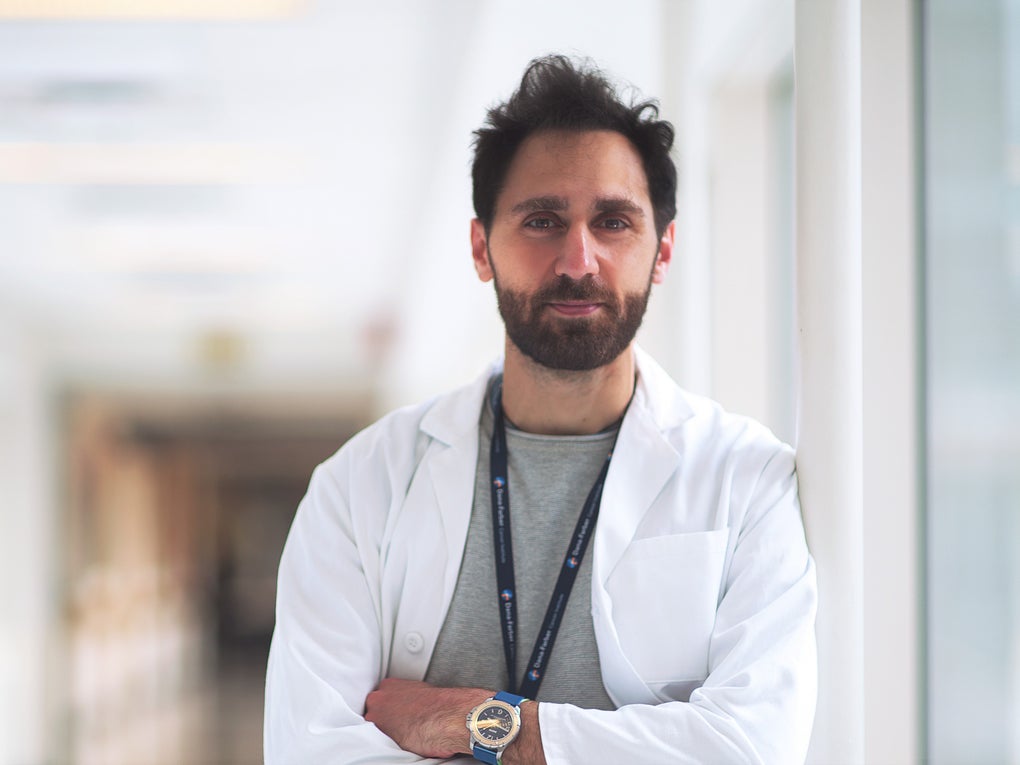
Success story: Dr. Gabriele Casirati - Grant Awardee 2025
Gabriele Casirati, MD, PhD, is a hematologist with clinical experience in the treatment of hematological malignancies and hematopoietic stem cell transplantation. Dr. Gabriele Casirati has received the DKMS John Hansen Research Grant in 2025 for the project "Epitope Editing to Enable Next-generation Non-genotoxic Conditioning Regimens for Hematopoietic Stem Cell Transplantation". The grant awards € 240,000 for a time period of three years. Two years later, we caught up with Dr. Casirati to learn more about the progress of his research, how the grant has supported his scientific career, what practical insights have emerged from his findings so far, and how his work could shape the future of transplantation medicine.
“The grant was especially meaningful because it bears the name of Dr. John Hansen, whose work had a profound impact on transplantation medicine and immunogenetics. Receiving the grant from DKMS represented an important recognition of both the scientific promise of epitope editing and its potential relevance to patients undergoing transplantation.”
Hematopoietic stem cell transplantation and stem-cell gene therapy can provide long-lasting - and sometimes curative - treatments for blood cancers, immune deficiencies, and other inherited blood disorders. However, patients must generally receive a combination of chemotherapy and/or radiation before transplantation to eliminate their existing blood-forming cells and create space for the new stem cells. These conditioning regimens damage DNA indiscriminately and can cause severe infections, organ toxicity, infertility and secondary malignancies. Their toxicity also prevents many older, medically fragile or less severely affected patients from accessing potentially curative therapies.
Antibodies directed against proteins such as KIT, which is expressed on hematopoietic stem cells, offer a safer and more targeted alternative. A major limitation, however, is that these antibodies cannot distinguish the patient’s existing stem cells from the therapeutic cells being infused. Because antibodies can remain in the circulation for an extended period, they may also eliminate the transplant product. Our strategy uses precise genome editing to modify only the small region or epitope recognized by the antibody while preserving the normal biological function of KIT. This provides the therapeutic stem cells with a form of molecular protection, allowing the antibody to eliminate unmodified cells while sparing the graft.
I felt deeply honored and grateful. The grant was especially meaningful because it bears the name of Dr. John Hansen, whose work had a profound impact on transplantation medicine and immunogenetics. Receiving the grant from DKMS represented an important recognition of both the scientific promise of epitope editing and its potential relevance to patients undergoing transplantation.
The grant has helped me consolidate an independent research direction at the intersection of genome engineering, stem cell biology and transplantation medicine. It provided dedicated support to pursue a technically ambitious project with a clear translational objective: further develop epitope editing as a platform to dissociate the therapeutic effects of targeted conditioning from the unintended depletion of the transplanted graft. It also contributed to increase the visibility of this research program within the transplantation and gene-therapy communities. For an early-career physician-scientist, this type of recognition is instrumental in progressing from promising preliminary observations to a coherent and independent scientific program.
During the first year, the DKMS John Hansen award granted me continuity and the opportunity to complete the experiments that ultimately lead to our work being published in Nature. Additionally, the DKMS John Hansen Research Grant allowed us to expand beyond the initial proof of concept and initiate mechanistic studies examining how anti-KIT antibodies eliminate hematopoietic stem and progenitor cells. These studies include testing engineered antibodies variants, comparing different mechanisms of KIT inhibition, and evaluating combinations of antibodies recognizing distinct regions of KIT. In the next phases, the grant will be particularly important for developing KIT-directed cellular immunotherapy strategies and testing innovative transplantation strategies based on the gradual replacement of hematopoiesis to achieve therapeutic benefit without impact on peripheral blood lineages.
The publication of our study, Non-genotoxic transplantation and in vivo selection through epitope editing, in Nature [1] was an important milestone and is closely aligned with the project’s overall objective. This work provided the scientific foundation for the DKMS project and will be complemented by the ongoing experiments that are supported by the DKMS John Hansen Research Grant. During the first year, I investigated the mechanisms of anti-KIT antibody-mediated stem-cell depletion, confirming that – in advanced humanized mouse models – KIT receptor blockade alone seems to be sufficient for host stem cell depletion. Our results suggest that depletion is not driven by a single mechanism, but rather the combined result of Stem Cell Factor (SCF)-signaling blockade, antibody bioavailability and Fc-dependent immune functions (e.g. cytotoxicity). We also found that the timing of antibody administration strongly influences selection and that combining antibodies that inhibit KIT through different mechanisms can enhance depletion. These findings provide practical design principles for future immune-based conditioning agents.
Our principal discovery is that epitope editing can overcome one of the central limitations of antibody-based conditioning. By changing only the antibody-recognition site on KIT, we made therapeutic stem cells resistant to anti-KIT antibodies while maintaining the protein’s essential function. This allowed us to administer the graft without waiting for the conditioning antibody to disappear from the circulation. In humanized mouse models, the antibody could eliminate established hematopoiesis while the epitope-edited cells generated a new, multilineage graft.
We also found that continued antibody exposure could progressively enrich the protected cells after transplantation without causing clonal dominance. By coupling KIT editing with therapeutic editing of BCL11A we enriched cells capable of re-expressing fetal hemoglobin, which can correct the phenotype of patients affected by sickle cell disease or beta-thalassemia. This creates a potential two-in-one strategy: the same antibody could provide targeted conditioning before transplantation and selectively increase the proportion of therapeutically edited cells afterwards.
If successfully translated, this approach could reduce reliance on chemotherapy and radiation, shorten or prevent prolonged aplasia and lower the risks of organ damage, infertility and secondary cancers. It may also make transplantation and gene therapy accessible to patients who are currently considered too medically fragile - or whose diseases are not considered severe enough - to justify conventional conditioning.
The impact to date has primarily been preclinical and enabling. During Year one, the grant helped us translate a broad concept - protecting epitope-edited stem cells during immune-based conditioning - into a systematic experimental program investigating antibody structure, mechanism, dose and treatment schedule. This allowed us to begin defining which antibody and, more broadly, immunotherapy, properties are most relevant for effective and selective hematopoietic depletion.
Many of the scientific relationships underlying this project were already established before the award, but the grant gave these collaborations a focused translational framework and the resources needed to deepen them. The work brought together investigators at Boston Children’s Hospital, Dana-Farber Cancer Institute and Harvard Medical School, as well as collaborators with expertise in hematopoietic stem-cell biology, hemoglobinopathies, genome-editing safety, clonal tracking and computational analysis. No single laboratory could easily provide all the expertise required for a project of this breadth. The DKMS allowed up to more closely connect our work with the broader transplantation community and with an organization whose mission is directly centered on improving access to lifesaving stem cell transplantation.
For young investigators, flexible, project-focused funding can be transformative. There is often a difficult gap between generating an initial proof of concept and obtaining the comprehensive preclinical data required to compete for larger grants or pursue clinical translation. Awards such as the DKMS John Hansen Research Grant help bridge that gap. This is particularly important in transplantation research, where experiments are long, costly and multidisciplinary. The grant provides not only resources but also validation from experts who understand the clinical importance of the problem. It gives young researchers the opportunity to take scientific risks, develop an independent identity and pursue ideas that may ultimately change how patients are treated.
I would encourage them to begin with an important unmet clinical problem and then identify the biological or technological barriers that prevent us from solving it. Transplantation medicine is especially rewarding because discoveries in immunology, stem-cell biology and genome engineering can be directly connected to patient needs and real-world clinical practice.
I would also emphasize the importance of collaboration. The most consequential questions in this field rarely fall within a single discipline; meaningful progress requires clinicians, immunologists, stem cell biologists, genome engineers and computational scientists to work together. Young scientists should remain ambitious, but equally rigorous and willing to follow the data, even when the results are unexpected or negative. Apparent setbacks often reveal overlooked biology, redirect entire projects or challenge established paradigms. Examining such findings carefully, with intellectual honesty and sound scientific reasoning, is essential to transform promising hypotheses into effective medicines for patients.
Our immediate objective is to advance epitope-edited, antibody-based conditioning toward clinical translation. This will require further optimization of editing efficiency and genomic safety, development of scalable and clinically compatible manufacturing protocols, and evaluation in larger and more immunologically complete preclinical models. We also need to define antibody doses and schedules that maximize hematopoietic replacement while preserving rapid and diverse blood-cell recovery. The completion of the John Hansen award project will be instrumental to these objectives.
More broadly, I intend to expand epitope editing beyond KIT and combine it with different therapeutic modifications for hemoglobinopathies, inherited immune deficiencies, bone marrow failure syndromes and hematologic malignancies. We are also exploring immune-based conditioning approaches that could simultaneously eliminate malignant or diseased hematopoiesis and create space for a protected donor graft. In the longer term, the same principles may support direct in vivo genome editing, in which therapeutic and protective edits are delivered inside the patient and antibody-mediated selection subsequently enriches the corrected cells. In parallel, I am also working on developing novel, bespoke gene editing tools that offer additional layers of optimization to achieve the highest ratio of on-target activity with while minimizing the risk of unintended genome modifications. The overarching goal is to make stem-cell transplantation and gene therapy safer, more precise and accessible to a much broader population of patients.
List of recent publications:
- Casirati, G., et al. Non-genotoxic transplantation and in vivo selection through epitope editing. Nature 2026; 657(8130): 262-274. doi.org/10.1038/s41586-026-10737-8
- Casirati, G. et al. Epitope editing enables targeted immunotherapy of AML. Nature 2023; 621(7978):404–414. doi: 10.1038/s41586-023-06496-5
- Casirati, G. To target, to escape, perchance to cure. Science 2024; 386(6723):739. doi: 10.1126/science.adt9029
- Casirati G. Breaking the Mold: How We Are Learning to Engineer Cancer-Specific Targets, Cancer Discov. 2024;14(9):1584-1589.
- Casirati G. Stem cells in disguise. Science 2024;383(6684):714–714. doi: 10.1126/science.adn9409